

Portable vs Fixed Solar Panels – Which Fits Your Off-Grid Life
Chasing the sun on the open road can feel liberating until cloudy skies leave your gear powerless. For outdoor enthusiasts and van lifers across North America, the choice between portable and fixed solar panels is more than a technical detail—it is about energy freedom during your wildest adventures or when the power grid fails. Discover the real differences in design, function, and reliability between these two solar solutions as you plan for self-sufficient journeys and eco-friendly escapes.
Table of Contents
Key Takeaways
| Point | Details |
| Portable Solar Panels | Ideal for outdoor activities and emergency backup, with easy transport and quick setup. |
| Fixed Solar Panels | Best suited for residential or commercial use, providing consistent high-energy production and grid integration. |
| Panel Technologies | Monocrystalline, polycrystalline, and thin-film technologies offer various efficiencies and costs suited to different applications. |
| Cost and Maintenance | Fixed panels have higher upfront costs but lower long-term maintenance, while portable panels have more frequent replacement needs. |
What Are Portable and Fixed Solar Panels?
Solar panels represent versatile energy solutions designed to harness sunlight and convert it into electrical power. While they share the fundamental purpose of generating renewable electricity, portable and fixed solar panels differ significantly in their design, functionality, and intended use.
Portable solar panels are lightweight, compact systems engineered for mobility and flexibility. Photovoltaic modules ranging from 50W to 300W characterize these adaptable energy generators. Key features include:
-
Foldable and compact design
-
Weights between 2-15 pounds
-
Easy transportation for outdoor activities
-
Quick setup and breakdown
-
Ideal for camping, RV travel, and emergency backup
In contrast, fixed solar panels represent permanent installations designed for long-term, high-volume energy production. These robust systems typically range from several kilowatts upwards and are mounted rigidly on rooftops, ground structures, or dedicated solar farms. Their primary characteristics include:
-
Larger panel sizes (often 250-400 watts per panel)
-
Permanent mounting solutions
-
Higher overall energy generation capacity
-
More complex installation requirements
-
Optimized for consistent, sustained electricity production
The fundamental difference lies in their scalability and intended application. Portable panels prioritize flexibility and convenience, while fixed panels focus on maximizing sustained energy output for residential or commercial needs.
Here’s a clear summary of portable and fixed solar panels to aid your selection:
| Panel Type | Typical Use Scenarios | Scalability & Installation | Power Output Range |
| Portable | Outdoor, RVs, backup, camping | Easy setup, mobile | 50W–300W per unit |
| Fixed | Homes, commercial, solar farms | Permanent, scalable | 250W–400W per panel, kilowatts+ |
Pro tip: Always match your solar panel choice to your specific energy requirements and mobility needs.
Types, Varieties, and Core Technologies
Solar panel technologies have evolved significantly, offering diverse options to meet varying energy needs and performance requirements. Photovoltaic panel technologies represent multiple approaches to converting sunlight into electrical energy, each with unique characteristics and applications.
The primary solar panel technologies include:
-
Monocrystalline Panels
-
Highest efficiency rates
-
Made from single-crystal silicon
-
Dark black or dark blue appearance
-
Most expensive option
-
Best performance in limited space
-
-
Polycrystalline Panels
-
Lower cost compared to monocrystalline
-
Blue speckled appearance
-
Slightly lower efficiency
-
Good for larger installation areas
-
-
Thin-Film Panels
-
Lightweight and flexible
-
Lower efficiency rates
-
Versatile installation options
-
Lower manufacturing costs
-
Suitable for portable applications
-
Advanced photovoltaic technologies continue pushing the boundaries of solar energy conversion. Emerging innovations like bifacial panels and integrated energy storage systems are expanding the potential applications across residential, commercial, and industrial sectors.
Each panel technology addresses specific energy generation challenges, with selection depending on geographic location, budget constraints, and specific power requirements. Performance metrics such as efficiency, durability, and cost play crucial roles in determining the most appropriate solar panel solution.
Pro tip: Consider consulting a solar energy professional to match the most suitable panel technology with your specific energy needs and installation environment.
How Each Solar Panel System Works
Solar panel systems transform sunlight into usable electricity through a sophisticated yet elegant process of photovoltaic conversion. Solar panel modules connect multiple solar cells in strategic series and parallel configurations to maximize energy generation.
The core solar panel functioning involves several key steps:
-
Sunlight Absorption
-
Photons from sunlight strike solar panel surface
-
Semiconductor materials within solar cells capture light energy
-
Electrons become energized and begin moving
-
-
Electron Conversion
-
Energized electrons create electrical current
-
Direct current (DC) electricity is generated
-
Internal panel architecture guides electron flow
-
-
Energy Transformation
-
Inverters transform DC to alternating current (AC)
-
Converted electricity becomes usable for devices and grid integration
Portable and fixed solar systems differ primarily in energy storage and distribution mechanisms. Portable systems typically store generated electricity in batteries for immediate device use, while fixed installations often connect directly to electrical grids or home power systems.
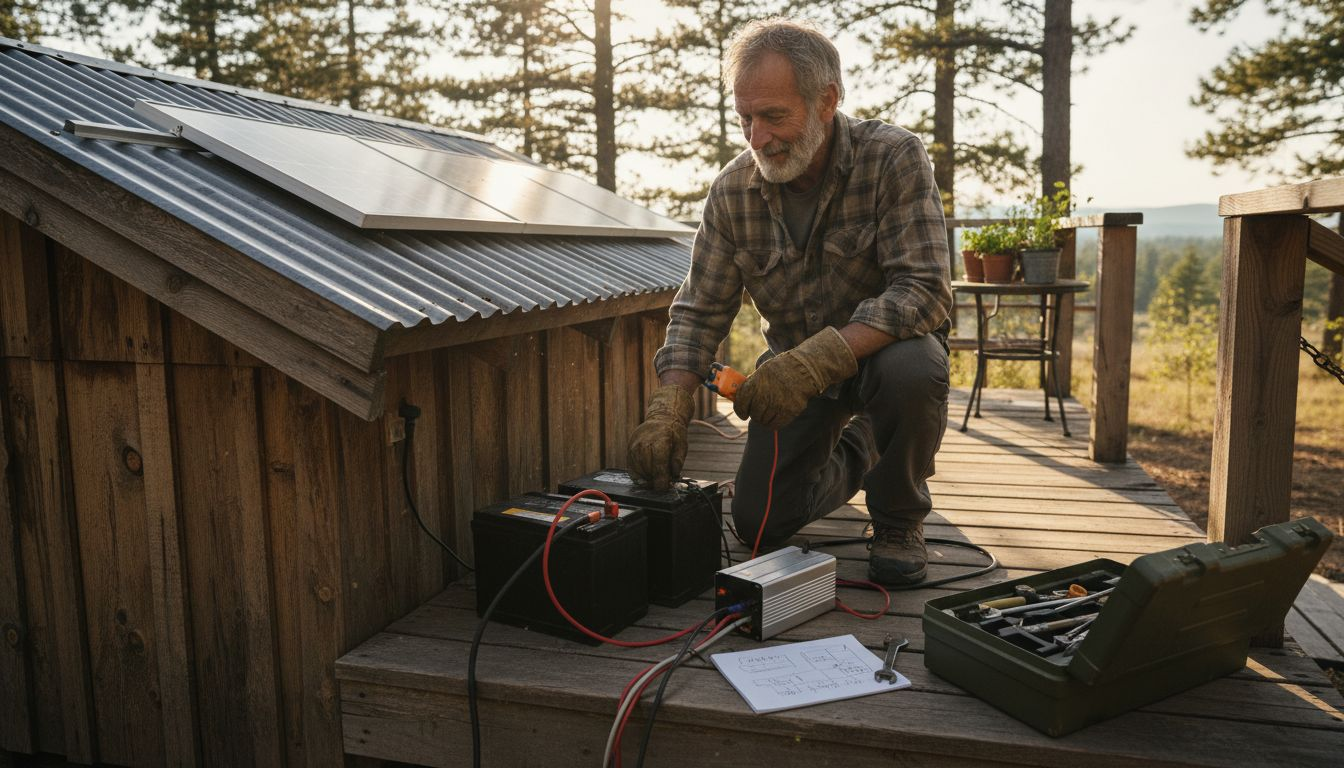
Photovoltaic technology continues advancing, with modern panels achieving increasingly sophisticated energy conversion rates. Innovations in cell design, material science, and energy management continue expanding solar power’s practical applications.
Pro tip: Always match your solar panel system’s specifications with your specific energy consumption and environmental requirements.
Key Advantages and Limitations Compared
Solar panel technologies present distinct trade-offs between portability and performance. Fixed solar panels offer greater stability and efficiency with unique advantages and constraints that differ significantly from their portable counterparts.
Comparative Advantages:
Fixed Solar Panels:
-
Highest energy generation capacity
-
Lower long-term degradation rates
-
Permanent, stable installation
-
Direct grid connection
-
Optimal positioning for maximum sunlight exposure
Portable Solar Panels:
-
Maximum mobility and flexibility
-
Easy transportation and setup
-
Ideal for remote or temporary power needs
-
Lightweight and compact design
-
Quick deployment in diverse environments
Limitation Comparison:
Portable panels sacrifice consistent energy output for convenience, while fixed panels trade flexibility for sustained power generation.
The primary trade-offs involve energy efficiency, durability, and application versatility. Fixed panels provide consistent, high-volume electricity generation with minimal maintenance, whereas portable panels prioritize adaptability and on-the-go power solutions.
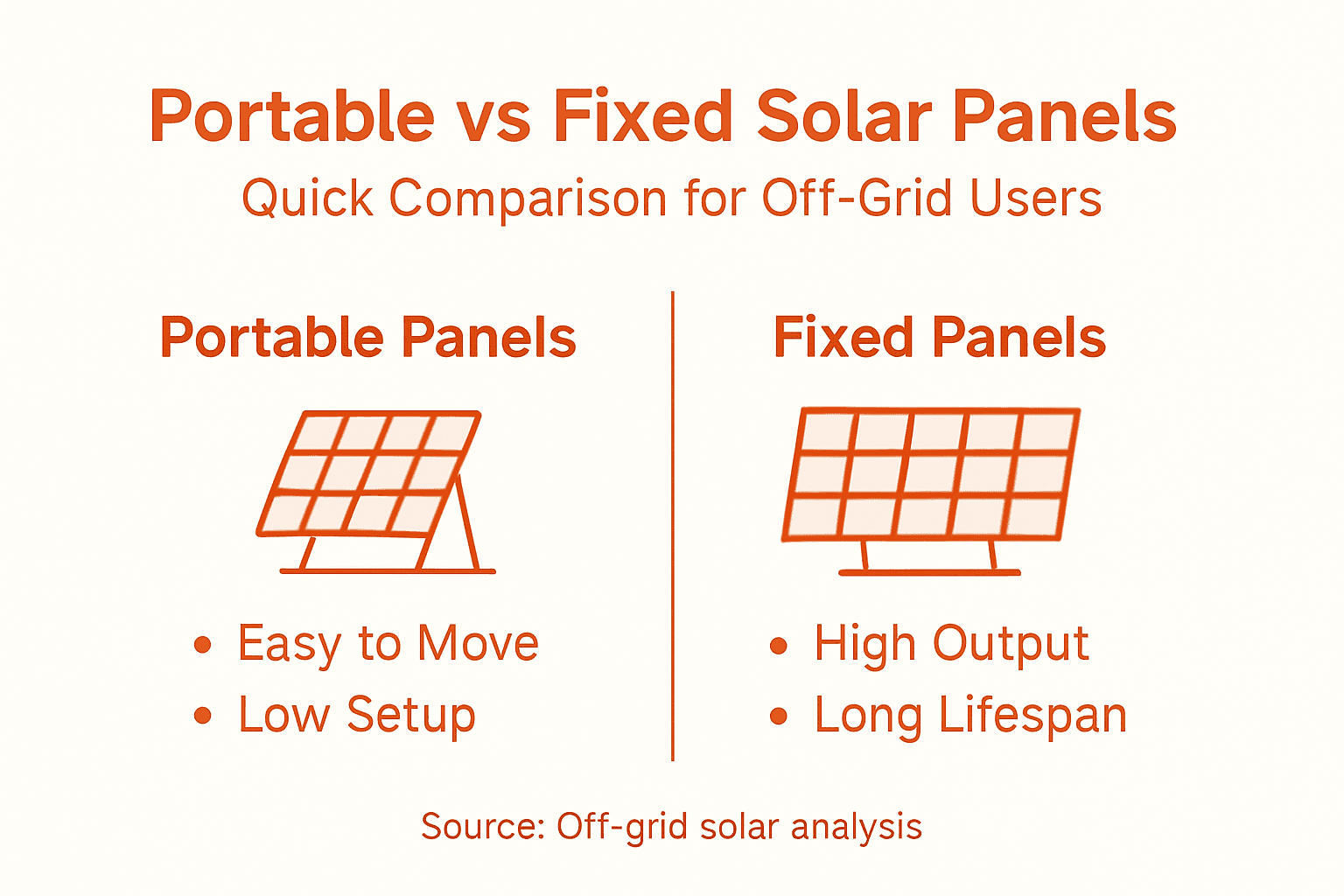
Technological advancements continue narrowing the performance gap between portable and fixed solar systems, with innovations in materials and design improving both categories’ capabilities.
Pro tip: Assess your specific energy requirements, mobility needs, and installation environment before selecting between portable and fixed solar panel systems.
Cost, Efficiency, and Maintenance Factors
Solar panel investments require careful consideration of long-term performance and economic implications. Fixed solar systems demonstrate superior cost-effectiveness through strategic energy generation and minimal maintenance requirements.
Cost Breakdown:
Fixed Solar Panels:
-
Higher initial installation expenses
-
Lower long-term operational costs
-
Reduced replacement frequency
-
Minimal maintenance requirements
-
Higher return on investment
Portable Solar Panels:
-
Lower upfront purchase price
-
More frequent replacement needs
-
Higher relative maintenance costs
-
Performance dependent on handling
-
Less predictable energy generation
Efficiency variations between panel types significantly impact overall system performance. Fixed installations typically achieve:
-
Consistent energy output
-
Optimal panel positioning
-
Reduced environmental interference
-
Seamless grid integration
-
Predictable long-term performance
Portable solar panels sacrifice sustained efficiency for mobility, while fixed systems prioritize maximized energy generation.
Maintenance strategies differ dramatically between portable and fixed solar panel systems. Fixed installations require periodic cleaning and professional inspections, whereas portable panels demand more hands-on care, careful storage, and frequent performance assessments.
Review this quick comparison of maintenance and return factors:
| Factor | Portable Solar Panels | Fixed Solar Panels |
| Maintenance Frequency | Frequent cleaning & checks | Occasional professional service |
| Expected Lifespan | 3–8 years | 20–30 years |
| Return on Investment | Lower, less predictable | Higher, with stable returns |
| Replacement Needs | More frequent replacements | Rare replacement |
Pro tip: Calculate your total cost of ownership, including installation, maintenance, and expected lifespan, before selecting between portable and fixed solar panel systems.
Choosing the Right Solar Panels for Your Needs
Solar panel selection requires a strategic approach tailored to individual energy requirements and lifestyle dynamics. Matching power systems to specific usage scenarios determines the effectiveness and satisfaction of your renewable energy investment.
Key Considerations for Selection:
-
Power Requirements
-
Daily energy consumption
-
Peak power needs
-
Seasonal variations
-
Backup power expectations
-
-
Usage Environment
-
Fixed location vs mobile needs
-
Indoor/outdoor applications
-
Climate and sunlight exposure
-
Geographic installation constraints
-
Decision Matrix for Solar Panel Selection:
-
Assess total energy consumption
-
Evaluate installation flexibility
-
Calculate budget constraints
-
Determine performance expectations
-
Consider future scalability
Portable panels excel in flexibility, while fixed systems optimize sustained energy generation.
The selection process involves balancing multiple factors beyond simple wattage. Portable solar panels work best for:
-
Camping and outdoor adventures
-
Emergency backup systems
-
Remote work environments
-
Recreational vehicle power
-
Short-term or temporary power needs
Fixed solar panel systems are ideal for:
-
Residential rooftop installations
-
Commercial building energy solutions
-
Long-term consistent power generation
-
Grid-connected energy systems
-
Permanent off-grid locations
Pro tip: Consult a solar energy professional to perform a comprehensive energy audit before finalizing your solar panel investment.
Discover the Perfect Solar Solution for Your Off-Grid Lifestyle
Choosing between portable and fixed solar panels can feel overwhelming but understanding your unique energy needs simplifies everything Portable solar panels deliver unmatched mobility, allowing you to power your adventures and emergencies wherever you go On the other hand, fixed solar panels offer sustained energy for your home or permanent setup at the cost of flexibility If you crave lightweight, durable, and efficient power sources designed for camping, van life, or disaster preparedness Portable solar panels from our selection offer exactly what you need
Make the smart choice now to harness clean energy exactly how and where you want it Our portable power stations and solar generators provide reliable off-grid electricity with easy solar charging options so you never lose power in remote locations Experience freedom, convenience, and eco-conscious energy solutions all in one place Start your off-grid journey today by exploring the best in portable solar technology at PortaPower Shop
Frequently Asked Questions
What are the primary differences between portable and fixed solar panels?
Portable solar panels are lightweight, compact, and designed for mobility, making them ideal for outdoor activities, RV use, or emergency backup. Fixed solar panels, on the other hand, are permanently installed and optimized for long-term, high-volume energy production in residential or commercial settings.
How do I determine if a portable or fixed solar panel system is right for my needs?
To choose the right solar panel system, assess your power requirements, usage environments, budget constraints, and future scalability. Portable panels are excellent for flexibility and temporary power needs, while fixed systems excel in sustained energy generation.
What are the maintenance differences between portable and fixed solar panels?
Portable solar panels require frequent cleaning and handling to maintain performance. In contrast, fixed solar panels need periodic professional inspections and less frequent cleaning, as they are installed in a more stable setting.
How efficient are portable solar panels compared to fixed solar panels?
Fixed solar panels typically offer higher efficiency and energy generation capacity due to their permanent installation and optimal positioning. Portable panels, while versatile, often sacrifice some efficiency for flexibility and ease of transport.